

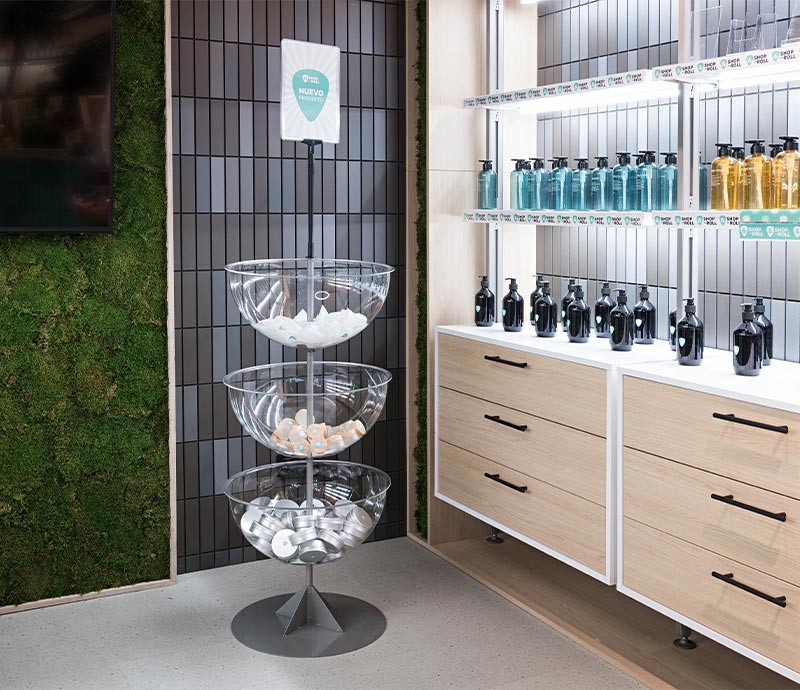
Product display units for supermarkets: types and which are most used
The way you present your products in the supermarket is fundamental not only to attract customers but also to influence their buying decisions.
That is why product display units for supermarkets are key in this process, since they offer an attractive, easy-to-access presentation of products, helping create an efficient and satisfying shopping experience.
Display units do not only help organise products in a logical, attractive way — they also play a crucial role in space management and in optimising customer flow within the store.
A good design and the right choice of displays on your part can lead to a significant rise in sales, especially for products placed in strategic spots that grab the consumer’s attention.
Types of display units used in supermarkets
Let us look at some of the most commonly used types of display units in a supermarket.
Fruit and vegetable displays
Fruit and vegetable displays are designed to maintain freshness and present these perishable products attractively.
They are generally easy to access and open, so customers can pick out the products they want. They can be mobile or fixed, with watering systems to keep produce fresh for longer.
Some of the advantages offered by fruit and vegetable displays are:
- They are designed to maximise the visual appeal of fresh products.
- They make it easier for customers to engage with the product, picking the quantity they want.
- Some include refrigeration technologies or misting systems to prolong freshness.
Impulse displays
Strategically placed near checkouts or in aisles where customers queue, impulse displays are designed to draw attention to spontaneous-purchase products.
They are usually small and can hold anything from sweets and magazines to small gadgets.
The advantages of impulse displays are several:
- They stimulate add-on purchases — ideal for raising the average spend per customer.
- They are flexible, versatile and easy to relocate according to the supermarket’s merchandising needs.
- They increase the visibility of smaller products that could go unnoticed on regular shelves.
Promotional displays
These displays are designed to highlight special promotions or seasonal events.
They come in several types, from special shelves to standalone stands.
- Their goal is to grab customer attention and make the promoted product easy to access.
- They create high visual impact and often include eye-catching graphic elements and special signage.
- They are highly flexible in placement, since they can be put in different strategic spots to maximise exposure.
- Because they are used for promotions, they create a sense of “urgency” and encourage impulse buying.
Totem displays
Totem displays are tall, narrow structures used to prominently display information or advertising.
They are widely used for advertising campaigns inside the supermarket and can include everything from graphics to digital screens.
The advantages of totem displays are several:
- Their vertical design makes the most of aerial space without taking up much floor area.
- They are versatile and eye-catching, perfect for marketing campaigns and for directing traffic inside the supermarket.
- Their graphic or digital content can be easily changed for new campaigns.
Box Pallet displays
Box Pallet displays are large containers or pallets used to sell products directly from their transport packaging.
This not only makes stock replenishment easier but also reduces handling costs.
- They cut down the time and effort needed to restock products.
- They minimise the need for extra shelves and other display materials.
- They are sustainable, as they encourage the use of recyclable packaging and reduce waste.
- Each type of display has a specific role in a supermarket’s merchandising strategy, contributing both to the consumer shopping experience and to the operational efficiency of the store.
When considering any of the different types of displays we have looked at, you should make sure you are using the space as effectively as possible, growing sales and improving customer satisfaction.
The key is to understand and apply the right type of display for each product type and location within the store.