
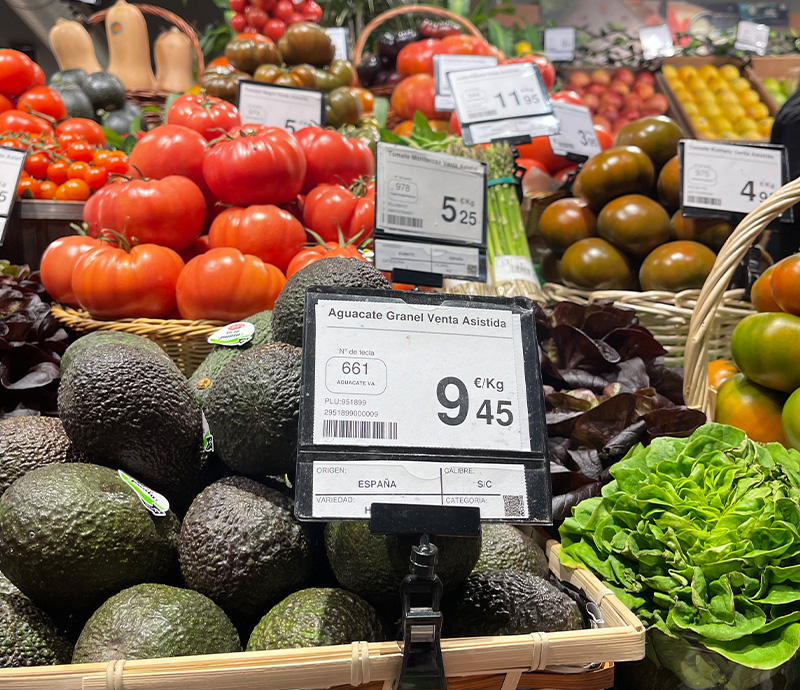
The in-store revolution: dynamic pricing and electronic shelf labels
Walking into a store and finding that the price of a product has changed since your last visit is no longer something from the future.
Dynamic prices are transforming the physical shopping experience, so as a point-of-sale manager you can take advantage of this evolution to always stay one step ahead.
This evolution is driven by the use of electronic shelf labels (ESL) and dynamic pricing tools, which let you react instantly to any change in the market.
Dynamic pricing: the change your store needs
In short, dynamic pricing is a methodology that adapts the price of your products based on real-time variables such as demand, available stock, time of day or even competitor actions.
This dynamic pricing approach is not only applicable to e-commerce — you can also integrate it into your physical store effectively and profitably.
So how do I implement dynamic pricing in my point of sale?
It all starts with data. To begin, you need to collect ongoing information about what is happening inside and outside your store.
Then, with specialised software and electronic shelf labels, you can adjust your prices automatically without manual intervention, giving you the ability to optimise margins without losing competitiveness.
For example, if you notice a one-off surge in demand for a product, you can adjust its price to maximise profit — an advantage that really makes a difference, especially in highly competitive markets.
Electronic shelf labels and price communication: a perfect tandem
Electronic shelf labels not only let you show updated prices in seconds — they also help you build trust if used correctly.
Think of a customer who returns to your store and sees the price has risen since the day before.
If you do not back it up with a good explanation, you can lose their loyalty.
But if you use information screens, contextual signage, a strong price communication strategy or even your sales team to explain why prices vary (for example, because of a limited offer or stock changes), the customer will understand and value your transparency.
Keep in mind that a well-implemented communication strategy turns dynamic prices into a tool to build loyalty, not to confuse.
And yes, it may seem like a challenge at first, but it really gives you the chance to create a more personalised and coherent experience.
How does dynamic pricing affect your customers?
The impact depends on how you manage it. If you do it with intelligence and empathy, consumers will see that you are offering them fair prices for the moment and the circumstances.
Because it is not about raising prices for the sake of it — it is about being agile and adding value.
When the customer realises they pay less at low-demand moments, or get a good deal at a specific time, a sense of reward is created.
This kind of behaviour supports customer loyalty, as long as they do not feel there is arbitrariness or a lack of transparency.
How to optimise your pricing strategies with technology
The good news is that you do not need to be a tech expert to take advantage of today’s pricing strategies — there are solutions tailored to every type of business.
From analytics software that spots buying patterns to electronic shelf labels you can sync with your management system to automate prices.
To optimise dynamic pricing, the ideal is to start with simple rules.
For example, increase the price of certain products by 5% at peak hours, or reduce the price of slow-rotation products at the end of the day. Then, as you build up data and insights, you can refine your algorithms and improve the accuracy of your decisions.
As you can see, dynamic pricing strategies are here to stay.
Because the benefits dynamic pricing offers are very clear:
- higher profitability
- flexibility
- competitiveness
- and a sharper customer experience.
So be clear about this: it is not a threat — it is a great opportunity to reinvent your point of sale.