
Custom price holders: why they matter for a better shopping experience
Did you know that the right product presentation in a store or supermarket can be decisive for the customer’s purchase decision?
One of the key tools in this area is custom price holders.
These small but powerful elements not only organise and highlight prices — they also contribute significantly to a smooth, pleasant shopping experience.
Today I want to talk to you about why custom price holders are so important to highlight products at your point of sale and how they can have a positive impact on your business.
Why custom price holders matter at the point of sale
Custom price holders are not just labels showing a product’s price — they are visual merchandising solutions for supermarkets and other stores that help attract customer attention and make the purchase decision easier.
Custom price holders let you display the necessary product information clearly and aesthetically, which is vital to keep a store organised and professional.
1. They grab customer attention
One of the main benefits of custom price holders is their ability to catch shoppers’ attention.
An attractive design consistent with the store’s image can make products stand out more.
And because they are personalised, these price holders can include colours, logos and typefaces that reinforce brand identity.
2. They make decision-making easier
For customers, having access to clear and accurate information is crucial.
Custom price holders ensure that prices, descriptions and any other relevant information are visible and well organised.
This not only improves the customer experience but can also increase sales, as shoppers feel more secure and confident when they have all the information they need to take a decision.
3. They improve store organisation
A fundamental aspect inside a supermarket is the organisation of the shelf.
Custom price holders contribute to keeping a visual order that helps customers find what they are looking for quickly.
By using clear, uniform price holder labels, you reduce the time customers spend searching for prices, which can improve their overall satisfaction with the store.
Types of price holders and their applications
There are several types of price holders for stores, each with specific features that fit different needs.
Let us look at some of the most common and their applications:
1. Price holder labels
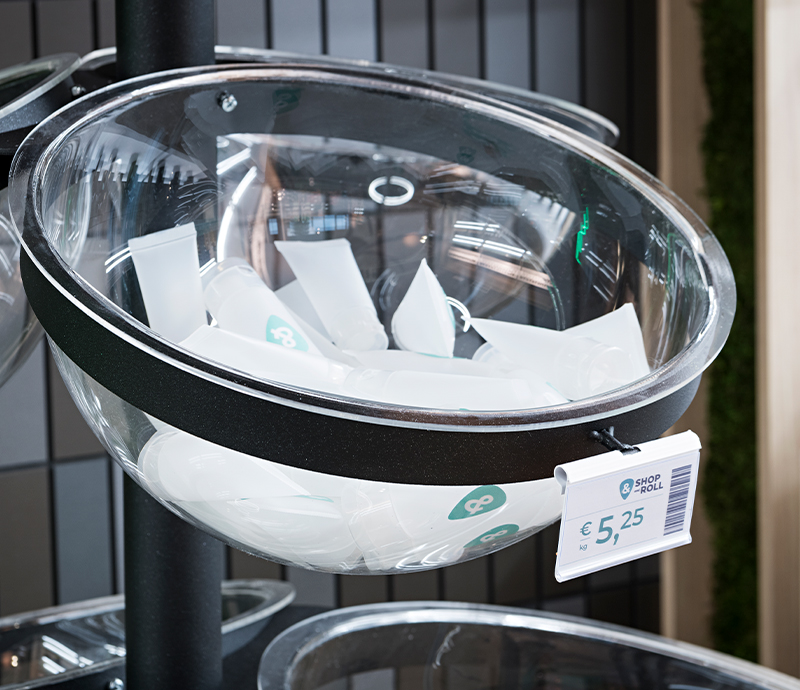
Price holder labels are probably the most widely used in stores and supermarkets.
These labels are easy to update and can include not only the price but also extra information such as discounts, promotions or product features.
Their flexibility and practicality make them indispensable for any retail business.
2. Price holder profiles
Price holder profiles are structures that allow labels to be placed in an orderly way on shelves.
These profiles are ideal for maintaining a clean, tidy look on gondolas, as they make it easy to insert and remove labels without damaging the material.
They can also be customised in size, colour and design, fitting perfectly with the store’s style.
Extra benefits of custom price holders
Beyond the aesthetic and organisational aspects, custom price holders offer other important benefits for stores:
1. They increase transparency and trust
Showing clear, accurate prices reinforces the customer’s trust in the store.
This is especially important in a competitive environment, where transparency can be a decisive factor in building customer loyalty.
2. They make inventory management easier
Custom price holders are not only useful for customers — they also help store staff.
Good organisation and labelling makes inventory management easier, helping to quickly identify products and their corresponding prices.
3. They adapt to promotions and campaigns
Stores often run promotions and special campaigns.
Thanks to custom price holders, it is easier to update and adapt the information about prices and offers, ensuring customers always have the most recent and relevant information.
As you can see, custom price holders are a fundamental tool for any communication and sales strategy in the supermarket.
They not only improve the look and organisation of the shelf but also make the customer’s shopping experience easier, raising satisfaction and potentially sales.