

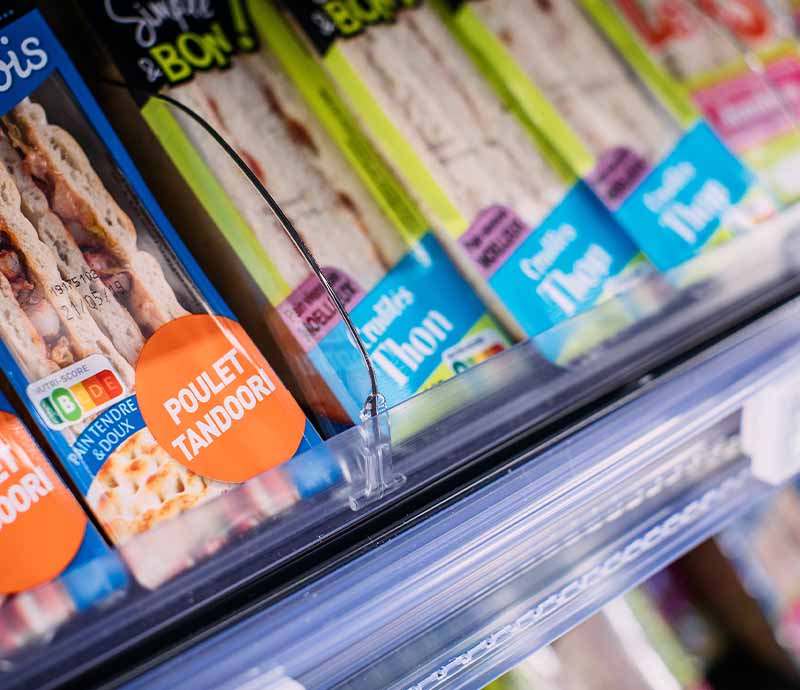
How auto-facing systems can boost your supermarket productivity
Product facing is a key strategy in the management of a supermarket.
It may seem like a simple task, but organising the shelves efficiently has a direct impact on productivity and sales.
So here is a detailed guide to help you understand how auto-facing systems can improve product visibility and your store’s sales, and optimise every square metre of your shelves.
What is auto-facing and why is it so important?
Facing means keeping products aligned at the front of the shelves to make them easy to see.
The goal is to ensure products are visible and accessible to the customer at all times.
However, as you will quickly realise, facing products manually can be a repetitive, time-consuming task.
This is where auto-facing systems, such as pushers, become strategic allies.
These devices keep products on the front line continuously, with no need for constant staff intervention.
Benefits of product facing for your supermarket
Adopting auto-facing systems does not just improve the look of your store — it also optimises resources and boosts results.
Let us look at some of the advantages:
1. Time and effort savings
By automating shelf organisation, your team can focus on more important tasks such as customer service or strategic stock replenishment.
2. Better customer experience
Well-aligned and well-faced products make searching easier, improve the perception of order and increase the likelihood of purchase.
3. Fewer errors thanks to product facing
With auto-facing systems, you remove inconsistencies in product alignment and ensure a steady presentation, even at peak times.
4. Higher sales
A flawless presentation, combined with good visual communication solutions to grow supermarket sales, can drive impulse purchases and highlight strategic promotions.
How to implement automatic merchandise facing systems
To get the most out of these tools, follow these practical steps:
1. Assess your needs
Analyse which product categories need more attention. For example, small or high-rotation items such as snacks or drinks tend to benefit more from auto-facing.
2. Pick the right system
There are different types of pushers and guides you can integrate depending on the size and weight of the products. Make sure to choose options that fit the dimensions of your shelves.
3. Review your store planograms
Before installing these systems, update the planograms to optimise the distribution of products on the shelf and make the most of the available space.
4. Train your staff
Although facing systems are very intuitive, it is important that your team knows exactly how they work.
Facing strategies to grow your sales
You should know that an auto-facing system is only one piece of the puzzle.
So to maximise its impact, consider some of these strategies.
1. Key categories at eye level
Place your highest-margin or high-rotation products at the customer’s eye level — that way you guarantee they will be the first to catch attention.
2. Highlighted promotions
Combine auto-facing with eye-catching price tags or special signage to highlight offers and discounts.
Common mistakes in product facing and how to avoid them
Even with the best systems, you can run into problems if you do not pay attention to certain aspects, as shown below.
1. Neglecting cleanliness
An effective facing system has to come with regular shelf maintenance.
2. Not reviewing inventory
Although pushers will keep the facing in place, if you do not monitor your inventory, you could end up with empty shelves and lose potential sales.
As you can see, auto-facing systems are a smart investment that will not only improve the organisation of your shelves — they will also lift operational efficiency and sales in your supermarket.